BF Solar — Uganda's Solar Experts Call us: +256 731 401839
Solar Battery Buying Guide

Lithium vs Lead Acid Battery for Solar in Uganda

Which solar battery is right for your home or business? Compare lithium and lead-acid batteries by upfront cost, usable energy, lifespan, maintenance and everyday performance before you invest in solar backup power.

Choose Wisely

Your battery determines how much solar energy you can use later

Solar panels generate electricity when sunlight is available. A battery stores energy so that a compatible system can supply power when solar generation is low or unavailable.

The right battery can help power lights, televisions, routers, computers and other suitable appliances after sunset. The result depends on your energy consumption, battery capacity, charging conditions and inverter design.

Lithium and lead-acid batteries both have a place in solar installations. However, they differ in how much stored energy you can normally use, how they age, and the care they require.

  • Compare usable energy, not just the advertised capacity.
  • Check the battery's expected cycle life and warranty terms.
  • Confirm compatibility with your inverter and charger.
  • Compare total ownership cost as well as initial price.
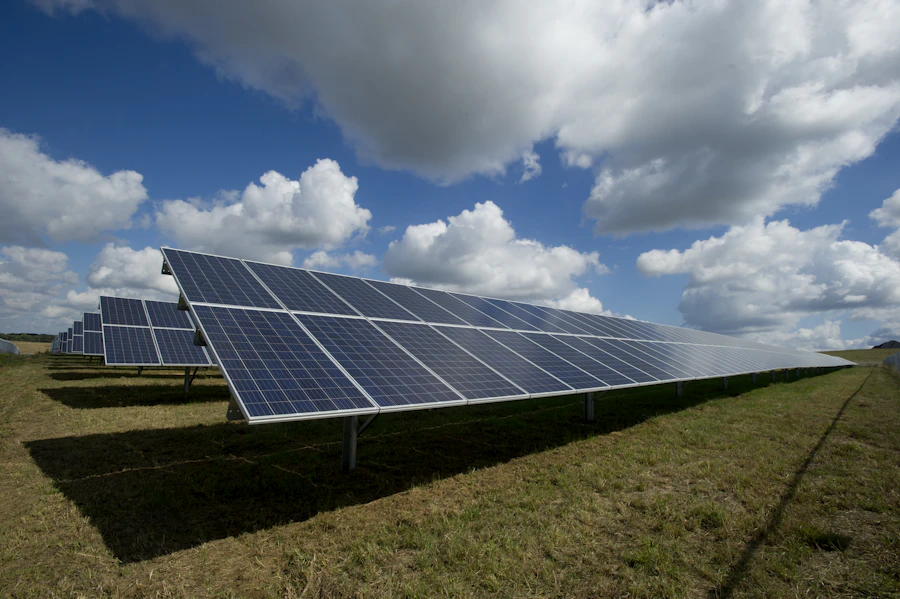
Solar panels collecting energy for a solar power system

A complete solar system combines suitable generation, storage, conversion and electrical protection.

Meet the Two Options

Lithium and lead-acid solar batteries explained

Battery chemistry affects performance, maintenance, installation requirements and long-term cost.

Technical equipment being checked during installation
Option 1

Lithium batteries

Lithium batteries, especially lithium iron phosphate (LiFePO4) models commonly used in stationary storage, can provide a high usable share of their rated capacity and generally require less routine maintenance than flooded lead-acid batteries.

Potential advantages
  • High usable capacity
  • Often longer cycle life
  • Usually low routine maintenance
  • Often compact for the energy stored
Things to consider
  • Usually higher initial cost
  • Needs compatible charging equipment
  • Battery management system is important
  • Must follow temperature limits
Electrical power infrastructure illustrating the importance of reliable energy storage
Option 2

Lead-acid batteries

Lead-acid batteries are an established storage technology. Solar installations may use flooded, gel or AGM designs. Their maintenance needs, discharge limits and performance differ, so the specific battery type matters.

Potential advantages
  • Can have a lower initial purchase price
  • Established battery technology
  • Available in different designs
  • May suit some low-budget applications
Things to consider
  • Often less usable energy per rated capacity
  • May have shorter cycle life in demanding use
  • Flooded types need maintenance
  • Heavy and require suitable ventilation where applicable
Remember: “Lithium” and “lead-acid” each cover different products. The exact model, battery chemistry, operating conditions, manufacturer specifications and warranty determine the real-world result.
Side-by-Side Comparison

Which battery performs better for solar?

Use this table as a general guide. Product specifications should always take priority over broad technology averages.

Feature Lithium (especially LiFePO4) Lead-acid
Initial purchase cost Generally higher Often lower, depending on type and capacity
Usable capacity Often allows a greater usable share of rated capacity Often needs a shallower discharge to support battery life
Cycle life Often higher, subject to model and operating conditions Varies considerably; deep cycling can shorten life
Routine maintenance Usually low, but monitoring and inspections still matter Flooded types require specific maintenance; sealed types differ
Weight and space Usually lighter for comparable usable energy Usually heavier for comparable usable energy
Charging Must follow the manufacturer's charging limits and BMS requirements Must follow the manufacturer's voltage and charging requirements
Compatibility Check inverter communication, voltage and charge settings Check system voltage, charging profile and battery configuration
Best buying approach Compare usable energy, cycle-life conditions and warranty Compare discharge limits, expected cycles and maintenance needs
Do not compare only the amp-hour rating. Battery voltage matters too. A 100 Ah battery at 12 volts stores a different amount of nominal energy from a 100 Ah battery at 24 or 48 volts.
Understand the Real Cost

Is a lithium battery worth the extra money?

A cheaper battery is not always the cheaper option over the full period you use your solar system.

To compare value, consider the purchase price, usable capacity, expected cycle life, replacement cost, charging performance and warranty support.

If you use your battery heavily every day, a suitable lithium battery may offer better long-term value because it can provide more usable energy and may last through more charge-discharge cycles. The outcome depends on the actual products and usage.

If your backup needs are modest and your budget is limited, a correctly sized lead-acid battery may still be suitable. It must be operated within its recommended limits.

Compare cost per usable kilowatt-hour over time. Include likely replacements and warranty conditions rather than choosing based only on the initial price.
Reviewing costs and financial information before a purchase
Planning and reviewing information before choosing equipment
Calculate Before Buying

How much battery capacity does your home need?

The right battery size depends on what you want to run, how long you want to run it, and how much backup energy should remain available.

Begin by estimating your daily energy use in watt-hours (Wh). For each appliance, multiply its wattage by the number of hours it runs, then add the totals together.

For example, a 60 W television used for four hours consumes about 240 Wh, or 0.24 kWh, before system losses.

Your battery must account for all intended loads, inverter losses, the battery's usable capacity and the backup duration you require. The solar panels must also be able to recharge the battery under expected conditions.

Important: Do not use nominal battery capacity as if all of it were available for use. Follow the manufacturer's recommended discharge limits and system design.
Choose for Your Situation

Which solar battery may suit you?

Your usage pattern and priorities are more important than choosing a battery simply because it is popular.

Choose lithium if...

You want higher usable capacity in a compact system, expect frequent daily cycling, value low routine maintenance, and can invest in a compatible battery and inverter setup.

Consider lead-acid if...

Your upfront budget is a major constraint, your backup requirements are modest, and you can follow the battery manufacturer's charging, discharge and maintenance guidance.

Check the whole system if...

You already own an inverter or battery, want to expand an existing installation, or need to power equipment with high starting loads. Compatibility must be verified first.

Protect Your Investment

Battery buying mistakes to avoid

1

Ignoring compatibility

Confirm voltage, charging settings, maximum current and communication requirements with the inverter.

2

Choosing capacity by name alone

Check watt-hours or kilowatt-hours, usable capacity and the manufacturer's discharge limits.

3

Ignoring warranty exclusions

Read the warranty for cycle, temperature, installation and operating conditions, plus the claims process.

4

Installing without proper protection

Use appropriate cables, overcurrent protection, isolation and installation practices for the battery system.

Long-Term Performance

How to make your solar battery last longer

Good installation, suitable charging and sensible usage help protect your battery investment.

  • Follow the manufacturer's charging and discharge limits.
  • Use an inverter and charger compatible with your battery.
  • Keep the battery within its specified temperature range.
  • Inspect connections and system performance periodically.
  • Do not ignore alarms, swelling, leaks, unusual heat or damage.
  • Have faults inspected by an appropriately qualified technician.

Battery lifespan is affected by usage, depth of discharge, temperature, charging practices and product quality. No technology has a guaranteed lifespan under every condition.

Solar panels generating electricity for an energy system
Frequently Asked Questions

Lithium vs lead-acid battery FAQs

Which battery is better for solar in Uganda?

Lithium batteries, particularly suitable LiFePO4 models, can be a strong option for frequent daily use because of their usable capacity and potential cycle life. Lead-acid may suit buyers prioritising lower upfront cost. The best choice depends on the actual product, budget, loads and system design.

Does a lithium battery last longer than a lead-acid battery?

Many lithium solar batteries are rated for more cycles than many lead-acid batteries, but ratings vary. Compare cycle-life specifications at the stated discharge depth and operating conditions rather than relying on chemistry alone.

Can I replace my lead-acid battery with lithium?

Sometimes, but not every system supports a direct replacement. Check nominal voltage, inverter charging settings, battery management requirements, maximum current and manufacturer compatibility guidance before changing batteries.

Can I use a lithium battery with my existing inverter?

It depends on the inverter model and lithium battery. Verify the approved battery list or manufacturer's compatibility guidance, voltage range, charging profile and any required communication connection.

Are all lead-acid batteries maintained the same way?

No. Flooded lead-acid batteries and sealed AGM or gel models have different maintenance and ventilation requirements. Follow the exact product's instructions.

What is more important: battery size or solar panel size?

Both matter, but they do different jobs. Battery capacity affects how much energy can be stored and used later, while panel capacity affects how much energy can be generated and how effectively the battery can recharge. The system should be designed as a whole.

Can a solar battery power a refrigerator overnight?

It can if the battery, inverter and solar charging system are appropriately sized. Refrigerators cycle on and off and may have significant starting surges, so estimate their energy consumption and starting requirements before selecting equipment.

How do I compare solar battery prices fairly?

Compare the same nominal voltage and energy capacity where possible, then examine usable capacity, cycle-life conditions, warranty, compatibility, installation requirements and replacement cost. A lower purchase price does not necessarily mean lower long-term cost.

Choose With Confidence

Need help choosing a solar battery?

Contact BF Solar to discuss your appliances, backup requirements, existing equipment and budget. We can help you identify the specifications to compare when selecting a solar battery system.

WhatsApp Us