Solar panels
Panels generate electricity during daylight. The required capacity depends on daily energy demand, available sunlight, shading, system losses and how quickly you need to recharge the battery.
Not sure how many solar panels, how much battery storage or what size inverter your home needs? Start with your appliances and daily electricity use. This guide helps you estimate your needs before requesting a solar quotation in Uganda.
A small home powering lights and phone chargers has different needs from a home running a refrigerator, television, water pump or air conditioner.
Choosing solar by the number of panels alone can lead to disappointment. Your system must generate enough energy, store enough electricity for the hours you need it, and supply enough power to run your appliances together.
A well-planned system considers daily energy consumption, simultaneous loads, battery backup, roof conditions, sunlight exposure and the possibility of adding appliances later.

Residential rooftop solar is one option for generating electricity for household use.
Panel capacity, battery storage and inverter power work together, but each solves a different problem.
Panels generate electricity during daylight. The required capacity depends on daily energy demand, available sunlight, shading, system losses and how quickly you need to recharge the battery.
The battery stores energy for evening use and backup. Its size depends on the appliances you need to run when solar generation is low and the duration of backup required.
The inverter supplies power to compatible appliances. Its continuous rating and surge capacity must suit the loads you plan to operate at the same time.
Estimate how much energy your appliances consume over a typical day. This gives you a starting point for choosing the battery and solar panel capacity.
For each appliance, multiply its power rating in watts by the number of hours it runs per day. Add the results together.
The result is measured in watt-hours (Wh). Divide by 1,000 to convert it to kilowatt-hours (kWh).

Enter the appliances you want to run, their wattage and the hours you use them each day. This simple calculator estimates energy consumption; it does not replace a full solar system design.
Use the rating on the appliance label or in its manual when possible. The examples below are illustrative; actual appliances can use more or less power.
This estimate adds the listed wattage multiplied by operating hours. It does not account for inverter losses, motor starting surges, solar weather conditions, or actual refrigerator duty cycles.
Your panels need to generate enough energy for your daily use and, if you have battery storage, recharge the battery as required.
A rough preliminary estimate can divide daily energy demand by the expected equivalent peak-sun-hours and then account for system losses. A site-specific assessment is needed to select an appropriate design.

The battery should be sized around the appliances you want to power when sunlight is insufficient, not simply around the total number of solar panels.
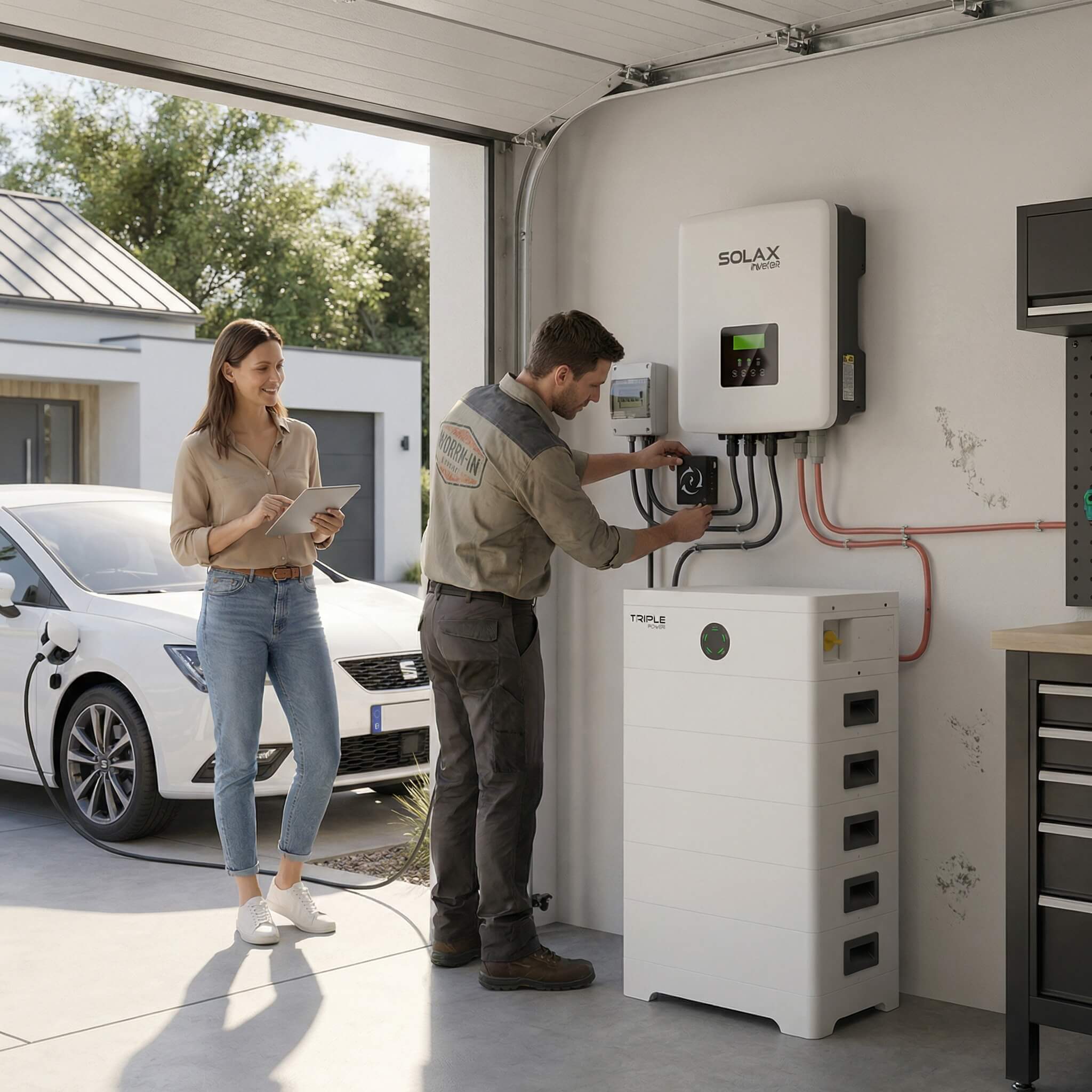
Start by calculating the energy consumed by the appliances you expect to run during the backup period. If you want power through the night, focus on evening and overnight use.
The battery's nominal capacity is not necessarily the same as its usable capacity. Battery chemistry, recommended discharge limits, efficiency and the manufacturer's specifications all affect the amount of energy available.
An inverter must supply enough power for the loads you expect to use together and handle any starting surge required by motors or compressors.
Add the wattage of appliances that may run at the same time. This helps estimate the continuous output you may need. However, a simple wattage total does not fully account for motor starting currents or other transient loads.
Refrigerators, pumps and some power tools may need higher starting power than their normal running wattage. Ask your installer to check the specific appliance and inverter specifications before selecting equipment.

Sharing these details helps an installer assess your needs and provide a more meaningful quotation.
List the appliances, wattage, daily usage hours and which ones must run at the same time.
Explain which appliances need power at night and how long you want the system to operate without enough sunlight.
Share your location, roof type, shading concerns and any existing electrical or solar equipment.
Explain your budget and whether you expect to add a fridge, pump, computer, air conditioner or other equipment later.
Two solar packages may look similar but include different capacities, equipment and installation services.
| Component | What to confirm |
|---|---|
| Solar panels | Total rated wattage, manufacturer, model, installation layout and warranty. |
| Battery | Nominal and usable energy, chemistry, voltage, warranty and expected cycle-life conditions. |
| Inverter | Continuous output, surge capacity, battery compatibility and charger specifications. |
| Protection equipment | Suitable cables, isolation, overcurrent protection, surge protection and earthing provisions. |
| Installation | Mounting, wiring, labour, testing, commissioning and handover. |
| Warranty and support | Coverage, exclusions, claim process and who provides after-sales support. |
| Expansion options | Whether future loads or additional batteries can be accommodated within equipment limits. |
The best decision balances today's needs, your budget and the appliances you may add later.
If you plan to add a refrigerator, water pump, more lighting or other equipment, tell your installer before the system is designed. Future expansion can affect panel capacity, inverter choice, battery configuration and wiring.
Buying much more capacity than you can use may unnecessarily increase the upfront cost. But buying too little can lead to expensive changes later. A good design explains both the current setup and its practical expansion limits.

List your appliances, multiply each appliance's wattage by its daily usage hours, and add the results to estimate daily energy consumption. A system designer then uses that estimate, local solar conditions, battery needs, system losses and peak loads to size the components.
There is no single number for every house. Panel count depends on each panel's rated wattage, household energy use, expected solar generation, available roof space, shading and battery charging requirements.
Estimate the energy consumed by the appliances you want to run overnight. Then account for usable battery capacity, inverter losses and the battery manufacturer's discharge limits. Your required backup duration is a key factor.
It may be possible, but the system must handle the refrigerator's energy consumption and starting surge. Check its specifications and account for other appliances running at the same time before choosing an inverter, battery and panels.
Not by itself. An inverter determines how much power can be supplied at a time. Backup duration mainly depends on available battery energy and the power consumed by your loads.
Often, but expansion depends on the inverter, charge controller, battery configuration, roof space, wiring and protection equipment. Ask about future expansion before purchasing the original system.
No. Generation changes with weather, shading, panel orientation, temperature, dirt and other site conditions. A system should be designed around realistic local conditions rather than assuming identical output every day.
Contact BF Solar with your appliance list, operating hours, desired backup duration, location and budget. These details help start a discussion about an appropriate solar solution.
Share your household power needs with BF Solar. Get help understanding the panels, battery storage and inverter specifications to consider before choosing your system.